
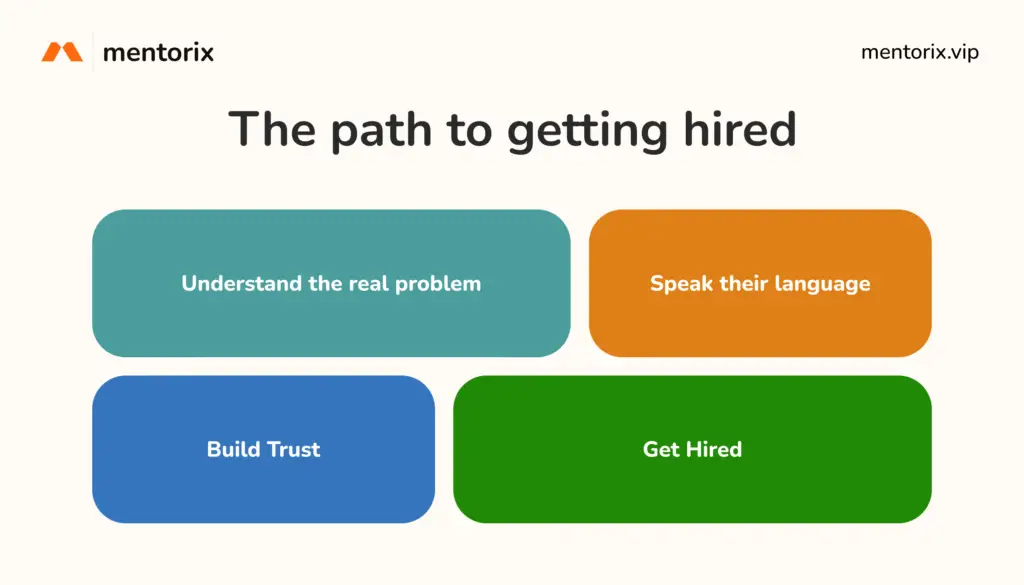
You’re not getting hired because clients don’t trust you, and they don’t trust you because you don’t understand their real problem.
I know this because I sent an email recently titled “3 reasons you’re still not hired.” Within hours, replies came flooding in. And they all said the same thing:
“I didn’t even realize I didn’t understand the client’s problem.”
They thought the issue was their portfolio, pricing, or the competition. But this is what’s really happening:
You’re speaking completely different languages from your clients.
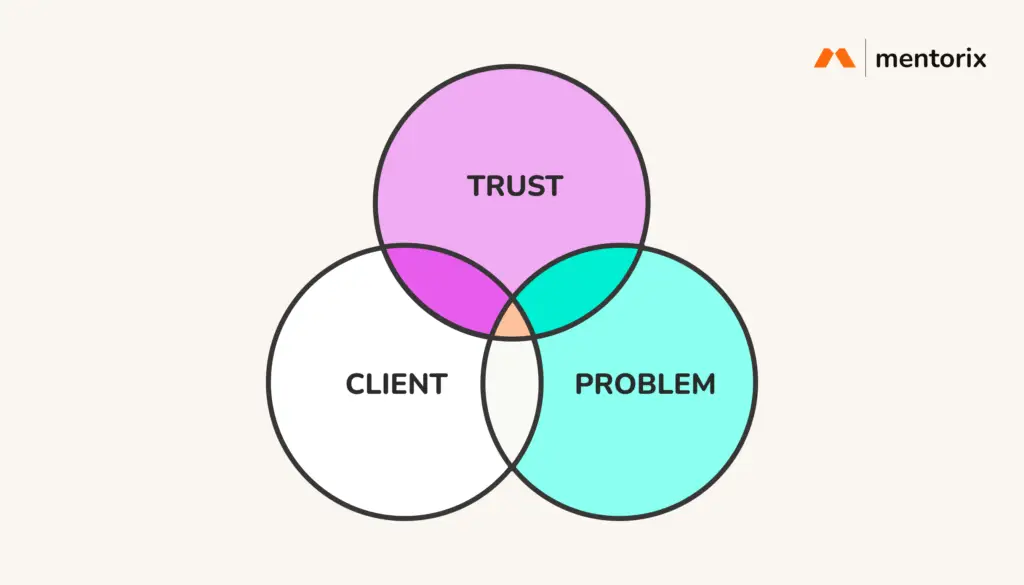
The client is thinking: “30 people subscribed to my product. 28 canceled. I’m losing money every day this isn’t fixed.”
And you show up saying, “Look at my beautiful designs. I’ve worked with 20 companies. Here are my Figma files. Should this button be blue or red?”
It’s like trying to sell trousers to someone who’s hungry and looking for food. Even if they need trousers, they’re not buying from you right now because that’s not what they need.
And one thing you haven’t come to terms with is this: People don’t like spending money, especially when they’re not convinced they need to. So if you can’t show them you understand their problem in the first conversation, they’ll never trust you enough to hire you.
In this post, I’ll show you why you don’t understand their problems, what clients actually mean when they speak, and the exact framework to prove you understand before they even have to ask.
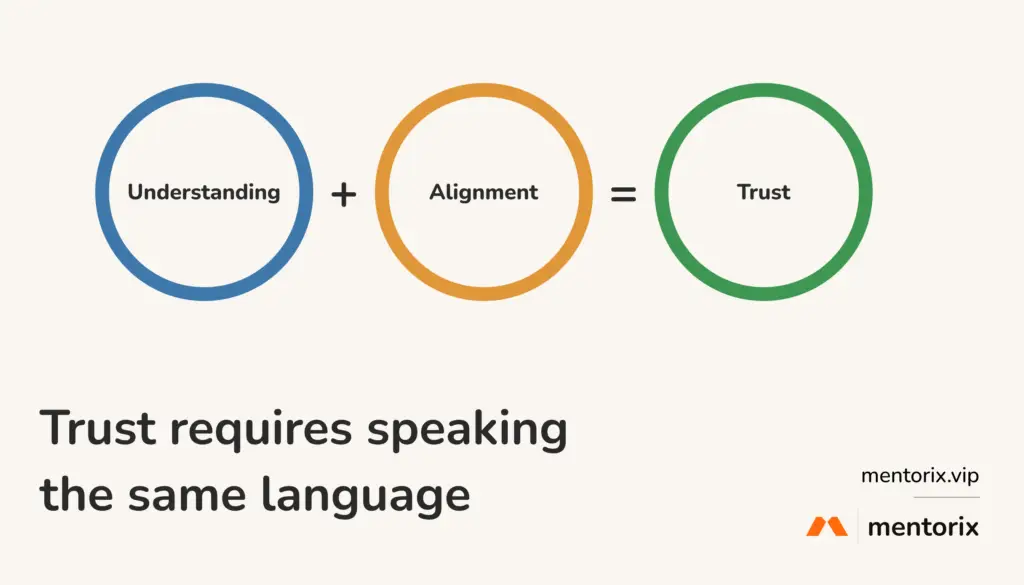
Trust requires speaking the same language
Clients can only trust what they understand.
If you speak design language and they speak business language, you will never connect. You have to understand client problems deeply enough to repeat them in their own words.
Because without connection, there is no trust. Without trust, there is no hire.
There is something called the Google 7-11-4 rule. It says that before someone buys from you, they need to consume 7 hours of your content, have 11 interactions with your brand, and experience 4 different touchpoints.
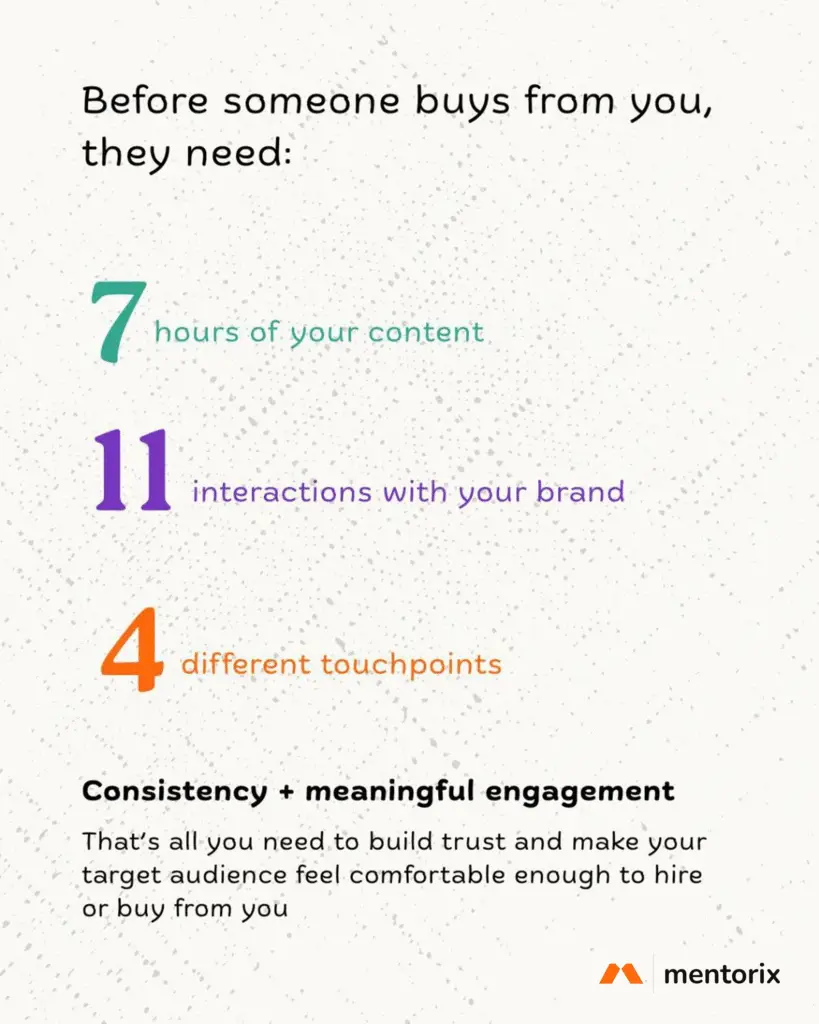
What this tells us is simple: trust takes time. But it also tells us something more important. If your first interaction with a client is speaking the wrong language, you will never make it to 11 interactions. They will stop at 1.
Let me show you what I mean.
A business owner launches their product. 30 people subscribe. 28 cancel. They are losing money every day.
Speaking design language sounds like this:
- “User personas for a project I worked on”
- “UI/UX case study: Let me show my work”
- “Design is how it works, not how it looks”
Speaking business language sounds like this:
- “How to talk to your users to find out why they cancel their subscription”
- “If your users are canceling their subscription, this is what it might mean for your business”
- “Why 28 out of 30 subscribers canceled, and what to do about it”
Do you see the difference? One is about you and your work. The other is about their problem and their business.
Trust breaks down the moment you start communicating in a language they don’t speak. It happens in your portfolio, your CV, your application, the proposal you send on Upwork or Contra, your cold email, and your discovery call.
And you cannot fake understanding.
People say “show metrics, use numbers, prove you did the work.” So you write “I increased conversions by 28%.” But when someone looks at your portfolio, they cannot see how you got that 28%. They cannot see the thinking. They cannot see the problem you solved. You can only put out what you know, and if you don’t know it well, it shows.
When you don’t build trust, clients ignore you. They ghost you. They go to someone else who has already built trust through content, through conversations, through showing they understand.
I had one client reach out to me months after she first saw my work. She refused to hire anyone else who reached out to her because she trusted me. Why? Because of the content she saw from me. Because I spoke her language from the beginning.
The internet is noisy. Everyone is talking. Everyone is saying the same shallow things. And so, it is easy to spot real from fake. And at the same time, It is easy to stand out when you say exactly what people need and tell them what no one else is saying.
That starts with understanding their problem in their language.
What clients actually say vs. what they mean
What most people get wrong: they think clients know exactly what they need.
They don’t.
What clients say depends on where they are in their business. A first-time business owner will say something completely different from someone whose business has grown beyond their current system.
Let me show you what I mean.
First-time business owners say things like:
- “I launched and I cannot get users”
- “Users don’t understand what the app does”
- “I don’t know how to build trust”
Growing businesses say things like:
- “We have too many clients and our system cannot handle it”
- “We need to scale but don’t know how”
- “Things are breaking because we are growing too fast”
Now, the problem: most of them do not understand what you do.
I have received questions like “How are you different from a developer as a ui/ux designer?” They genuinely do not know. So when you assume they understand the difference between design, development, and content, you have already lost them.
But the bigger issue: clients do not walk around saying “I need a content strategy” or “I need to redesign my website.”
That is not how it works in real life.
Clients are struggling in their business. They do not know what they need to fix it. So they start searching for answers.
They type things like “How to get more clients” or “How to get more users” into Google. The internet tells them “Build a website.” So they assume the website is the solution. By the time they reach out to you and say “I need a website,” they have already decided what they think they need.
When they come to you and say “I need a website,” they are not being helpful. They are just telling you what they think they need. And most of the time, they are wrong.
Let me give you an example.
Someone reached out to me to build a dashboard for his business. After asking questions, I told him to use Notion instead. He did not need a full dashboard at that moment. What he was looking for was a system to manage his processes. Notion was easier to set up, cheaper, and solved his actual problem.
Tomorrow, when he scales beyond Notion, he will come back to me.
Do you see the difference?
In their heads, they are thinking: “I have this problem. I think this will be the solution.” But they do not understand problem solving. They are solving for symptoms, not the root cause.
And when you just give them what they asked for without understanding why, you are also solving symptoms, just like them.
If it is the real solution to their problem, it would solve it. But if it is not, the problem will show up again. Then you hear things like “I built the website but I am still not getting users.”
So how do you recognize when someone is giving you a surface request?
You ask questions.
When they say “I need a website,” I ask “Why do you think you need a website?” Then I ask another why. And another. I keep asking until I find the real problem they are trying to solve.
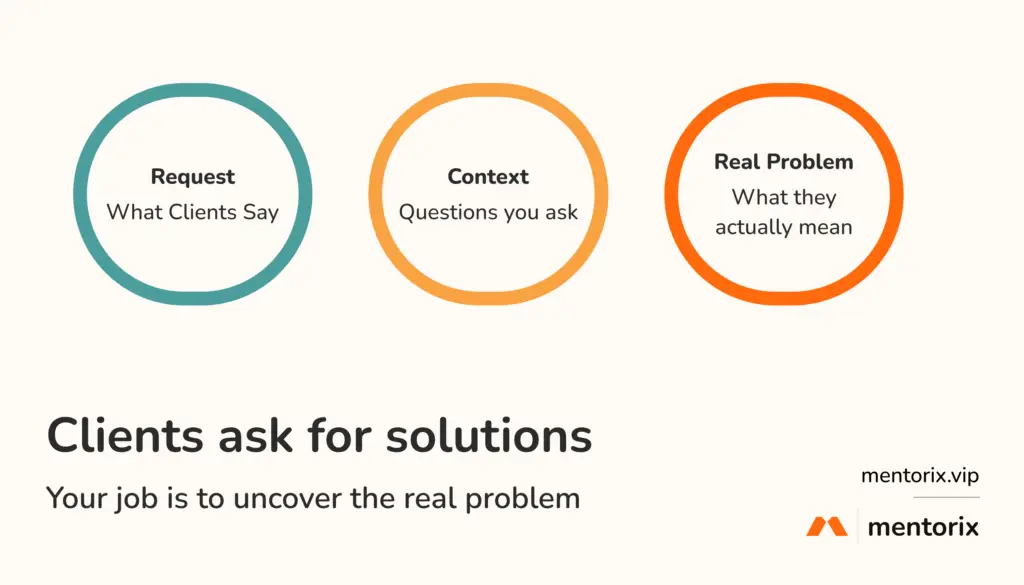
I call this the Surface Request to Real Problem framework.
Most clients don’t tell you their real problem. They tell you what they think the solution is. This framework helps you decode it.
- Surface request: What they ask for
- Underlying problem: What they are actually struggling with
- Business outcome: What changes when you solve the real problem
Problem solving is a skill. Just like design, development, and content creation. You need to learn it if you haven’t.
When you translate their surface request into the real problem, they are surprised and relieved because no one else has ever asked them these questions. Everyone else just took their request and started working.
The pattern is simple: What clients ask for is a solution. What they need is someone who understands the problem.
Once you prove you are the one who really understands their problem, standing out and getting hired becomes as easy as breathing.
I had one mentee get so many jobs that he got too busy just because he understood their problem and was able to communicate it.
6 Reasons why you don't understand their problems
If you don’t understand client problems, it’s not entirely your fault. You were set up to fail. Let me show you why.
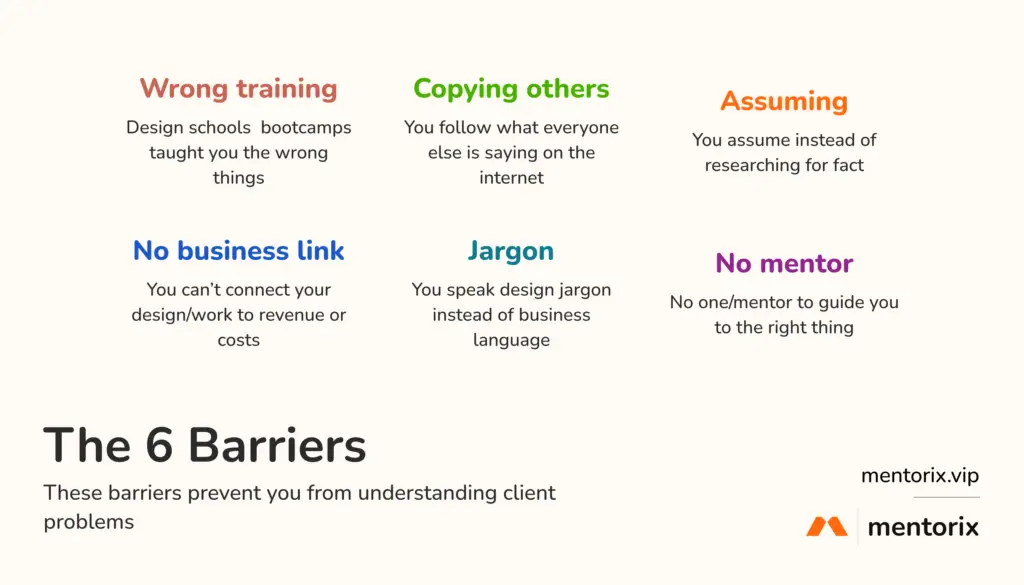
1. Design schools and bootcamps taught you the wrong things
They taught you principles. UI. How to redesign screens. How to spot colors. How to use Figma.
But they did not teach you how to carry out proper research. They did not teach you how to identify business problems. They did not teach you how to connect what you design to what the business actually needs.
You came out knowing how to make things look good. But you did not come out knowing how to solve problems.
2. You follow what everyone else is saying on social media
When you came out of school or bootcamp, you started following designers. And every designer is saying the same thing because all of them learned from the same place.
They keep shouting “UX is how it works, not how it looks” and “User personas matter” and “Design thinking.” Then tomorrow, they wonder why clients don’t take them seriously.
Everyone is focused on the UI. Everyone is reechoing the same surface information with no depth. And you are copying them because you think that’s what success looks like.
3. You assume instead of doing research
You see a website and think “The alignment looks off. The website looks cluttered. I’ll redesign it.”
Then when you look at your redesign, there was no decluttering. You just changed the hero text and changed some colors. You changed the brand just because you wanted to redesign something.
I wonder how that solves any problem.
Research would say: “The business was not getting users. They used to get users before, but something changed and they stopped. So I went in to understand why they were no longer getting users, and this was what we discovered. Because we discovered this, we decided to do this. We have not tracked progress yet, but we want to see what will happen in the next 3 months.”
Do you see the difference? One is assumption. The other is research.
4. You cannot connect your design to revenue or costs
This is just a communication problem. One thing that is missing.
Let’s assume you do the right thing. You finish designing. You just need to say “Because I designed this, this will happen for the business.”
But most of the time, you just say “I decided to change the layout. I moved this to here. I updated the navigation.”
Things that are not relevant to the business.
You are not saying “This redesign will reduce checkout abandonment by 15%, which means the business will keep more customers and increase revenue.” You are just describing what you did, not what it will do for them.
5. You speak design jargon instead of business language
You say things like “user persona,” “UX design is how it works, not how it looks,” “design thinking,” “information architecture.”
But what does that mean in real life?
A client is trying to understand why users are leaving. What does “design is how it works, not how it looks” mean for this client? What does that solve?
You are not connecting your words to their reality. You are just repeating what you learned. Surface information with no depth.
6. No one taught you how to do this
You have no mentor who understands these nuances. Everyone around you is living by the same vibes, saying the same things, making the same mistakes.
A good mentor would show you realistically what is possible, what you are missing, and how to bridge the gap. They would teach you how to have conversations that matter. How to ask the right questions. How to connect what you do to what the business needs.
But most people do not have that. So they keep doing what they see everyone else doing, and they wonder why it’s not working.
How to prove you understand their problem
You cannot get hired if clients don’t trust you. And they cannot trust you if you don’t prove you understand their problem. So how do you prove it?

1. Ask business questions, not design questions
The questions you ask reveal whether you understand business or just design.
Don’t ask “What colors do you like?” or “Do you have brand guidelines?”
Ask questions like:
- “Why do you want to redesign your website?”
- “What made you feel like you need LinkedIn content?”
- “What problem are you trying to solve?”
- “What’s the motivation behind this project?”
- “What do you want the website to do for you?”
These questions always reveal the real problem.
For example, someone says “I want to redesign my website.”
You ask: “Why do you want to redesign your website?”
They say: “Since this website has been here, I have not been able to get users. Customers are not coming, so I want to redesign it.”
Now you know the real problem. Customers are not coming.
So you ask: “What are the things you have done to try to make customers come that did not work?”
Now you know what they have tried, what worked, what did not work. So you do not give them something they have already tried that did not work.
Do you see how the questions change everything?
2. Research the business before the conversation
This is not just about whether they got funding or how many employees they have.
You need to gather everything you can about the business:
- Look at reviews. What are customers saying? What are users saying?
- Look at the founder’s posts on social media. What are they talking about? What problems are they trying to solve?
- Look at posts from people who work in the company. How do they behave with each other? What culture do they have?
- Look at their competitors. What are they doing better?
- Look at news about the business. Are they struggling? Growing? Changing direction?
When you show up knowing all of this, you show up like someone who is already an insider, someone who understands. And if you are someone who already understands, they can easily make you an insider.
3. Speak in outcomes, not features
Everywhere you communicate, your portfolio, your proposals, your social media content, your emails, your discovery calls, you need to speak in outcomes, not features.
Features sound like this:
- “I will create user personas”
- “I will design a modern interface”
- “I will do journey mapping”
- “I will conduct UX research”
Outcomes sound like this:
- “I did this and was able to generate this amount of money for the client”
- “This redesign reduced checkout abandonment by 20%, which increased revenue by $50,000”
- “By simplifying the onboarding process, we increased sign-ups by 35% in the first month”
Do you see the difference? One talks about what you will do. The other talks about what will happen for the business.
4, Show business thinking in your portfolio or case study
Most portfolios just show screens, beautiful UI, clean layouts, and nice colors.
But they do not show the business problem you solved.
Your portfolio should answer these questions:
- What problem was the business facing?
- How was that problem affecting revenue, customers, or costs?
- What did you do to solve it and why?
- What happened after you solved it? Did revenue increase? Did customers stay longer? Did costs go down? Even if it’s your projection.
If your portfolio does not answer these questions, you are just showing that you can make things look good. You are not showing that you can solve business problems.
And clients hire people who solve business problems, not people who make things look good, especially if you want these clients to be the ones reaching out to you.
What happens when you get this right?
When you do this right in the first conversation, you get hired and you get paid serious money. I am not joking. It has happened to me several times and I have seen it happen to some of my mentees as well.
The client will not negotiate on price. They will not be asking “Can you do 50% less?” They will be asking questions like “How do we get started?” and “When can you begin?” and “How do I protect myself in this contract?”
Because you have already proven you understand their problem better than anyone else who reached out to them.
The most common mistake I see people making is re-echoing what every other person is saying or what you just learned without understanding the depth of what it actually means, especially for that client or situation.
An example: “Design is not how it looks, but how it works.”
Okay, yes I agree but how does that help someone who is losing customers? What does that mean for them? What will you do differently because of that statement?
If you cannot answer that, you are just repeating words. And clients can tell.
5 ways to understand their real problem
You do not need to wait for a client to contact you before you prove you understand their problem. You can prove it in your content, in your portfolio, in everything you put out there and everywhere you show up online. When you do this right, clients will single you out from the crowd and reach out to you.
This is how you do it.
Step 1: Search the internet to see what clients are actually saying
Do not wait to hear from them first. If you wait, it might never happen.
Go and search what people are saying. What problems are they talking about? What language are they using? What are they complaining about?
Look for real-life problems, not generic terms like “retention challenges” or “acquisition challenges.” Look for exactly how these clients actually state their problems.
Thank god for AI. You can use Grok to find out what they are saying on X. You can go to Reddit. You can use ChatGPT to find out what they are saying on LinkedIn and every other social platform where they are hanging out.
Shadow the business gurus they are listening to and see what they are complaining about in those business people’s content.
Use the exact language they use.
Step 2: Tailor your content and portfolio around what they are saying
Once you know what they are saying, you can tailor your content and portfolio around that.
For example, you search the internet and you see people saying “I am having imposter syndrome. I want to write on LinkedIn so I can get more people to know my brand, but I do not know what to talk about.”
Now in your content, you can say “How to create a LinkedIn post even if you have imposter syndrome.”
Or you see people saying “I launched my app and I am struggling to get my first 100 users.”
Now in your portfolio, you can show a project where you helped a client get their first 100 users. You relay your work into something that will make the business get their first 100 users.
Step 3: Connect your work to what it does for the business
Do not just show what you did. Show what it does for the business.
For example, instead of saying “This is how I redesigned the interface. Design is how it works, not how it looks,” say this:
“I redesigned the checkout process to solve the problem of cart abandonment. I chose to reduce the checkout from 5 steps to 3 steps because of Hick’s Law, which states that the more choices you give people, the longer it takes them to make a decision. If users can complete checkout faster with fewer steps, fewer people will abandon their carts. And if fewer people abandon their carts, the business will convert more visitors into paying customers and increase revenue by an estimated 15-20%.”
Do you see the difference? You are not just describing what you did. You are showing them the chain reaction.
What you did → What happens for users → What happens for the business.
Step 4: Show their exact situation and how to work around it from your perspective
The details you include matter. Show their situation and how they can work around it from your perspective.
If you are a designer, show it from a design perspective. If you are a content writer, show it from a content perspective. If you are a web developer, show it from a development perspective.
Someone who is struggling to get their first 100 users should see themselves in your content or portfolio. They should think “This person understands exactly what I am going through.”
Step 5: Make it fresh, not noise
Content that makes them stop and think is content that shows things from a different point of view. When it is not noise and when it is not what every other person is saying.
If your content is just re-echoing what everyone else is saying, they will scroll past. But if your content has fresh insights and genuinely helps them, they will follow you. They will remember you. They will reach out to you.
What to expect
If you follow this framework and create content or update your portfolio, expect two things:
First, you will feel more satisfied and confident to create more content because what you create will no longer be what everybody is saying. You will be creating what is actually out there in the real world.
Second, do not expect that if you create one piece of content, you will get a job immediately. It does not work that way. I told you earlier about a client who saw my content and reached out to me months later.
It works, but you have to give it time. Remember the Google 7-11-4 rule: 7 hours of content, 11 interactions, 4 touchpoints. You have to keep showing up. Keep speaking their language. Keep proving you understand.
When you do this consistently, clients will single you out and hire you.
Conclusion
Understanding your client’s problems in their language is not optional anymore. It is the difference between getting hired and getting ignored.
When you speak their language, you build trust. When you build trust, they single you out from everyone else. When they single you out, they hire you.
This is not about being a better designer or writer or developer. This is about being the person who gets hired. Your client’s only option right now.
Start today. Go search what your target clients are saying. Look at your portfolio and ask yourself: does this show I understand business problems, or does it just show I can make things look good? Look at your content and ask yourself: am I speaking their language, or am I just repeating what every other person is saying?
The clients are out there. They are struggling. They are looking for someone who understands. If you can prove you understand before they even ask, you become the only option.
If you want help doing this, I created something specifically for this. My Freelance Mentorship walks you through exactly how to do everything in this post.
We start with a LinkedIn profile audit. Then I show you how to post content that builds trust and gets clients to DM you instead of you reaching out to them. I show you how to know your target audience, how to craft an offer they cannot say no to, and how to get clients from content, cold DMs, and emails.
If you are tired of applying and getting rejected and ignored, tired of sending proposals and hearing nothing back, this is your next step.
Learn more about Freelance Mentorship here